Listen
Collect structured local feedback and understand the issues people raise.
Ground intelligence is the systematic collection and use of field-level information — constituency feedback, local issues, voter sentiment — converted into actionable strategy. Booth management is its sharpest edge: the organisation that converts a supporter into an actual vote.
Connect local listening and field coordination with an organised constituency-level campaign plan.
Collect structured local feedback and understand the issues people raise.
Give field teams and volunteers a clear brief, reporting rhythm and responsibilities.
Coordinate constituency and booth-level planning ahead of key campaign moments.
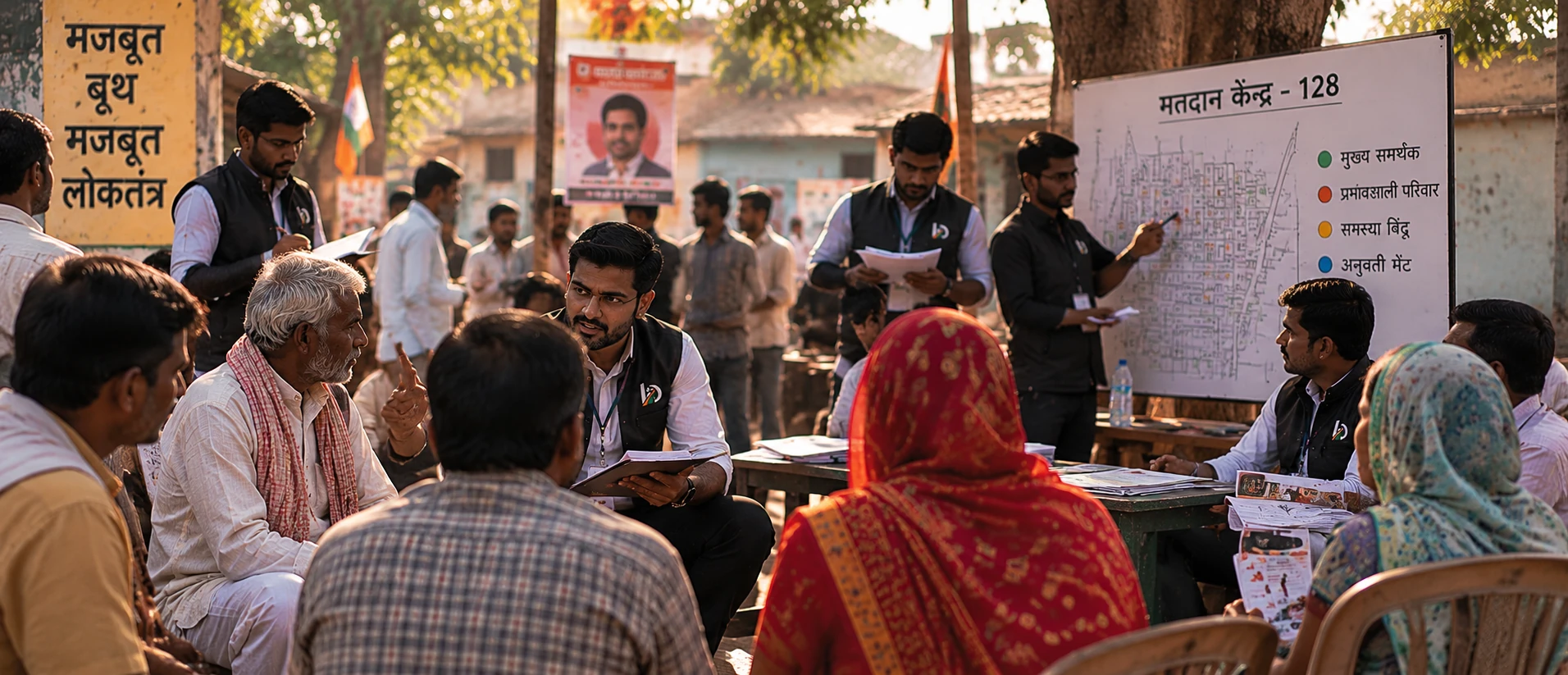 LISTEN. UNDERSTAND. CONNECT.
Ground intelligence is a structured way to understand local priorities, questions and conditions. It can draw on conversations with community members, field observations, interviews, public information and the experience of local teams. The goal is to understand context rather than collect activity for its own sake. Research questions, locations and reporting methods are agreed up front so that information can be compared carefully and used in a way that respects people’s time and privacy.
Booth management focuses on the organisation required at the constituency’s smallest operational units. Depending on the brief, that may include mapping responsibilities, maintaining local team contacts, preparing checklists, coordinating volunteer communication and creating a simple reporting rhythm before key campaign dates. A clear structure helps teams know who to contact, what needs follow-up and where information should be recorded. It also makes it easier to identify gaps early enough to address them.
LOKDRISHTI connects field inputs with campaign strategy and communication when that is part of the engagement. Local feedback can help explain patterns seen in research or online conversation, while clear coordination helps teams carry agreed priorities into the field. The exact approach depends on geography, available local capacity and the time available. Information is handled within the agreed scope, and field activity is reviewed with the client team. These systems support readiness and coordination; they do not promise voter behaviour or an election result.
A field reporting system should be simple enough to use consistently and careful enough to preserve context. Short briefs, defined reporting routes and regular check-ins help separate observations from assumptions. When field information is brought into planning conversations, teams can decide what needs verification, what calls for a response and what should simply be monitored.
Digital builds belief; ground converts it. Elections are frequently decided by booth-level organisation — and booth-level organisation is decided months before polling day.
Good work starts with shared context and clear ownership. The exact scope is confirmed before work begins.
We discuss the objective, geography, current situation, decision-makers and timeline.
We define priorities, responsibilities, deliverables and a practical review rhythm.
Work is delivered against the agreed brief, with useful feedback guiding the next steps.